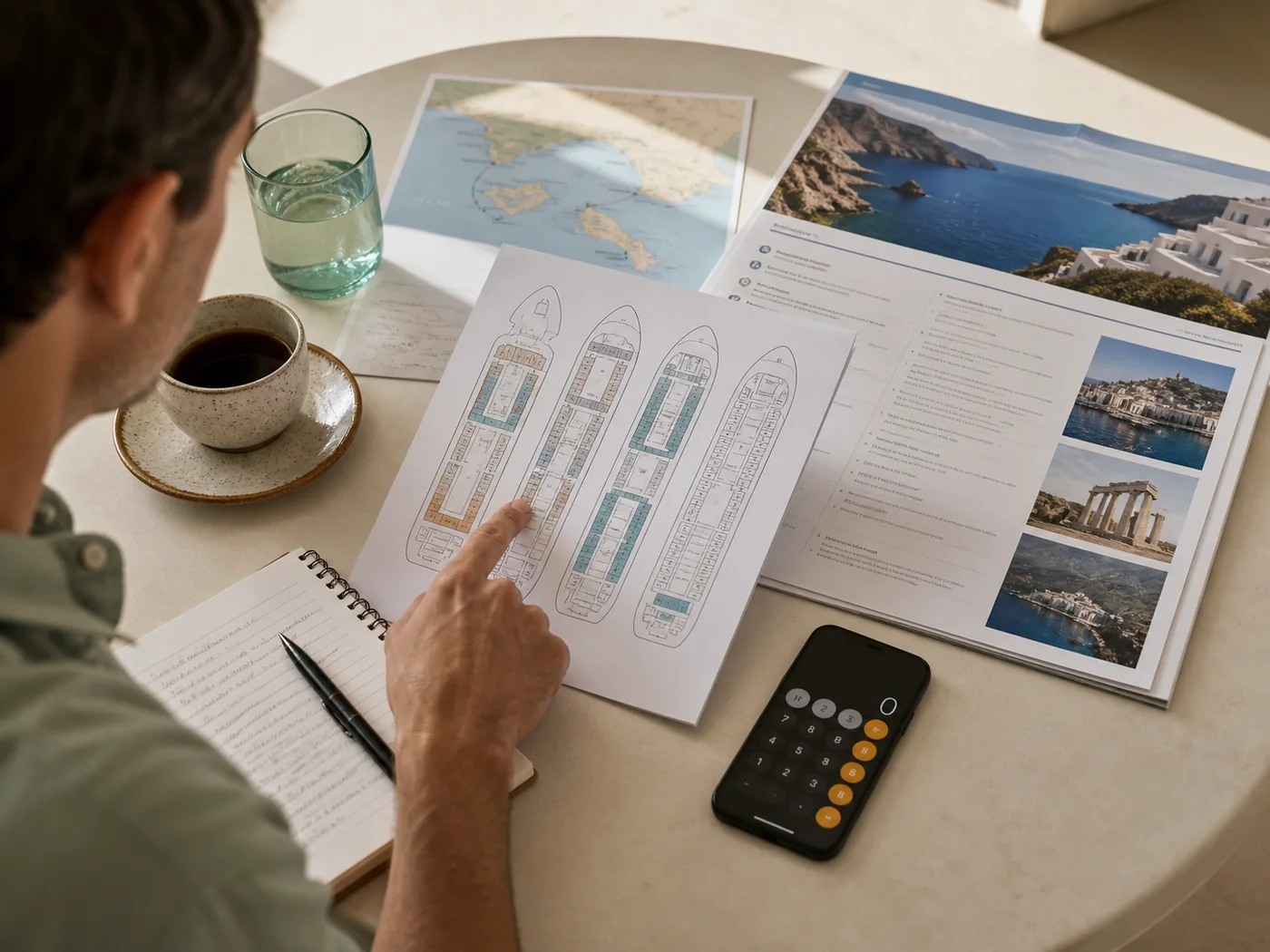
A ship can be marketed as family-friendly and still be a poor fit for your family. The useful questions are more specific: what works at your children’s ages, what happens after bedtime, and how much effort each day requires.
Quick take
What matters most
- Check age rules for clubs, pools, activities, and childcare on the exact sailing.
- Choose a cabin that still functions when one child is asleep.
- Alternate demanding port days with lighter days and genuine downtime.
- Verify documents, medical needs, and the complete family price before paying.
1. Match the ship to the children’s actual ages
A long list of family facilities is meaningless if your child cannot use them. Check minimum ages, height requirements, toilet-training rules, opening hours, reservation systems, and whether programs combine age groups on quieter sailings.
For teenagers, independence and social space may matter more than scheduled activities. For toddlers, shade, naps, food timing, and short walking routes often shape the day.
2. Design the cabin around bedtime
Look beyond maximum occupancy. Check how every bed opens, whether it blocks the balcony or bathroom route, where luggage and a stroller can go, and whether adults have anywhere to sit once children are asleep.
Connecting cabins can add privacy and another bathroom, but confirm the exact door arrangement and rules for minors. A balcony may add space, yet it also requires clear family safety rules and active supervision.
3. Choose a location that reduces daily friction
Being reasonably close to the places your family uses repeatedly can be more valuable than a theoretically perfect quiet zone. Map the cabin to food, pool deck, kids’ areas, elevators, and the gangway route.
Still check above and below for late entertainment, early deck setup, and service spaces. With light sleepers, a cabin deck between other cabin decks is a sensible starting point.
4. Test the itinerary for energy, not only destinations
Several early starts in a row can undo the advantage of a highly rated itinerary. Note tender ports, long transfers, full-day tours, and consecutive sightseeing days. Then add sea days and shorter independent stops where the family can reset.
Choose one must-do activity per port. Children often enjoy the day more when there is time for a beach, playground, snack, or unstructured walk instead of a sequence of adult landmarks.
5. Check food, routines, and practical backup options
Review dining hours, flexible options, allergy procedures, room-service terms, and whether familiar food is available outside the main meal periods. Bring essential supplies that may be difficult or expensive to replace onboard, within the cruise line’s packing rules.
Download entertainment and offline content before travel. Ship Wi-Fi may be a paid extra and performance can vary.
6. Prepare documents and health needs early
Documentation for minors can depend on citizenship, itinerary, guardianship, and who is traveling. Use official government guidance and the cruise line’s current requirements; do not rely on a forum post from a different route.
Ask a healthcare professional about motion sickness or ongoing medical needs before travel. The CDC advises cruise travelers to plan for care abroad and consider coverage for medical treatment and emergency evacuation.
7. Compare the complete family price
Add flights, transfers, a pre-cruise hotel, gratuities, drinks, Wi-Fi devices, specialty activities, childcare, shore transport, and insurance. Check which children’s facilities are included and which are capacity-limited or charged separately.
The lowest cabin fare is not automatically the best family value. A better location, a workable sleep layout, or one fewer complex transfer can improve the trip more than an extra onboard feature.
Save before booking
Family cruise fit check
Age and height rules checked for this sailing
Every cabin bed and the bedtime layout understood
Daily walking routes and noise sources reviewed
Port days balanced with lighter time
Food, allergy, and routine needs confirmed
Documents, medication, and insurance verified
All family extras included in the comparison
Official source notes
These sources support the operator rules and practical travel points in this guide. Our recommendations are editorial judgments, not promises by a provider. Accessed August 30, 2026.