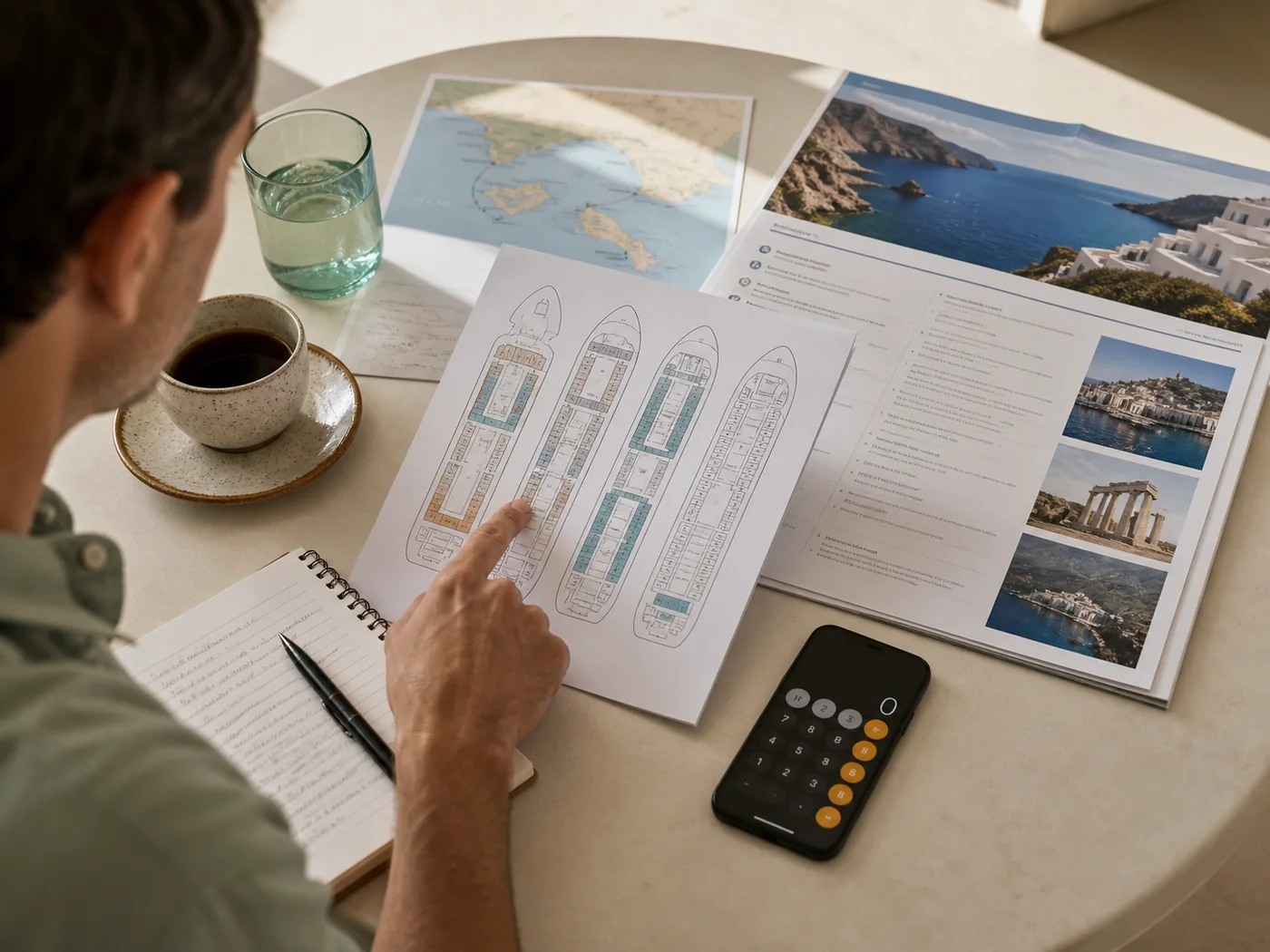
A cruise can look right on the search page and still be wrong in practice. The useful comparison is not fare versus fare. It is the complete trip versus the way you actually want to travel.
Quick take
What matters most
- Choose the style and scale of ship before comparing cabin prices.
- Count usable time in port, not only the number of destinations.
- Compare the trip total after transport, fees, connectivity, drinks, and port days.
- Read the current fare terms and travel-document rules before paying.
1. Start with ship fit, not the lowest fare
Write down what would make the week feel good: quiet evenings or late entertainment, a small ship or many venues, structured activities or independent time, formal dining or flexibility. Then compare ships against that list.
A bigger ship may offer more choice but require more walking and advance reservations. A smaller ship may feel calmer but have fewer backup options when weather changes. Neither is automatically better; the question is which trade-off suits this trip.
2. Do the itinerary math
Count full days, partial days, sea days, and the hours you can realistically spend ashore. A port listed from 7 a.m. to 2 p.m. is not a seven-hour sightseeing day once disembarkation, transport, and the return buffer are included.
Also check whether the ship docks or uses tenders, whether the port is close to the place named in the itinerary, and whether an overnight stay changes what you can do without rushing.
3. Read the cabin location in context
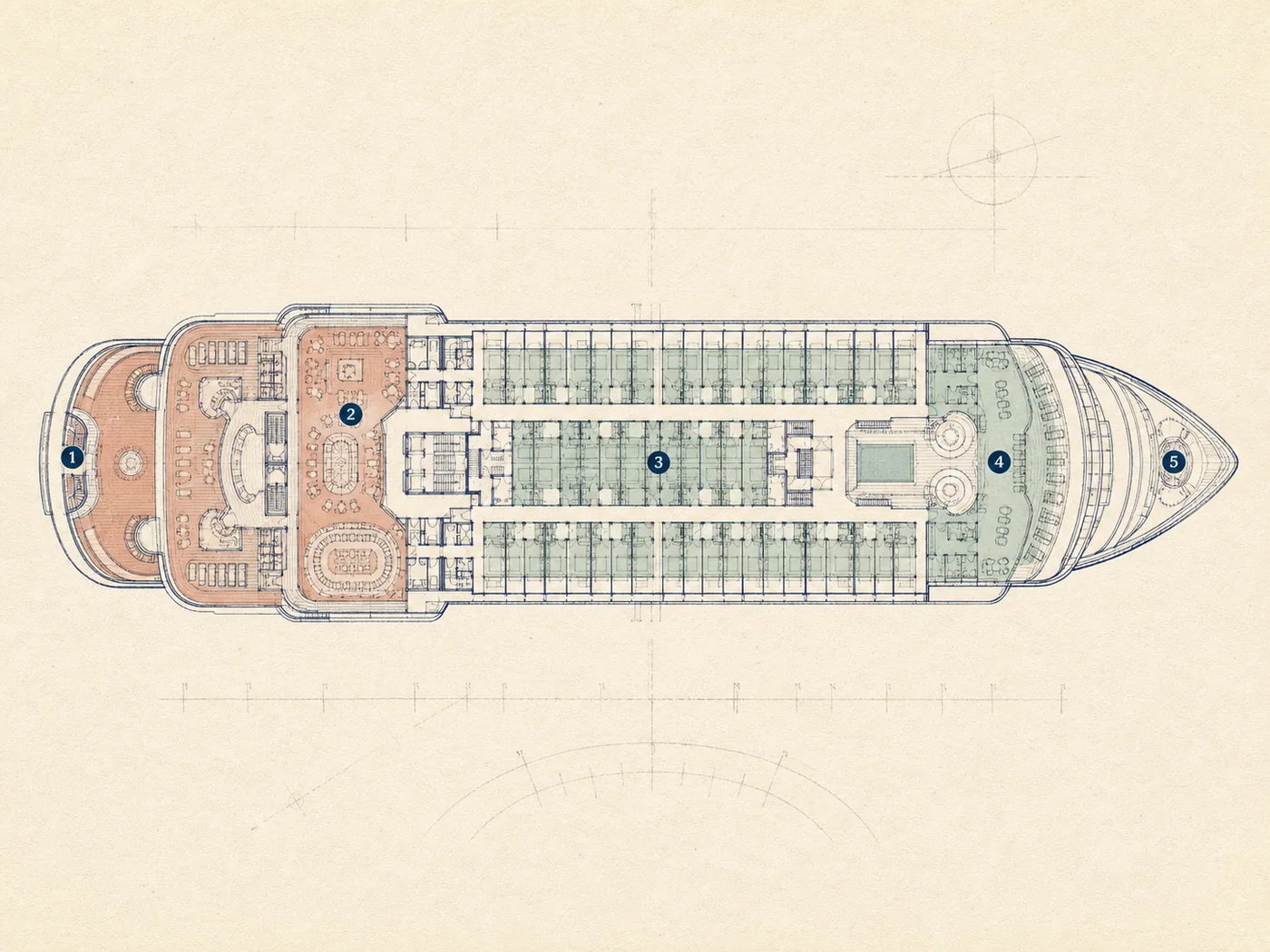
A cabin category describes the room. The deck plan describes the experience around it. Check what is directly above, below, beside, and across the corridor before you pay.
If motion is a concern, a lower and more central position is often the calmer starting point. If convenience matters more, being near the right elevator bank may be worth some hallway traffic. Treat the location as a personal compromise, not a universal ranking.
4. Compare the real trip total
Build one simple total for every option. Include travel to the embarkation port, a sensible pre-cruise hotel when needed, transfers, gratuities or service charges, drinks, Wi-Fi, specialty dining, shore transport, insurance, and the journey home.
Keep optional spending separate from unavoidable spending. This makes it easier to see whether a cheaper fare is genuinely cheaper or merely moves more of the cost outside the headline price.
5. Read the terms attached to this fare
Check the deposit, final-payment date, cancellation schedule, change fees, and exactly what is included. Promotional labels are less important than the written terms attached to the booking you are about to make.
Save a copy of the offer, fare rules, cabin number, itinerary, and inclusions. If a benefit matters to your decision, make sure it appears in the booking confirmation rather than only in advertising copy.
6. Verify documents, health cover, and the recovery plan
Entry rules depend on citizenship, itinerary, and the way the cruise begins and ends. Check every country on the route, including stops where you do not plan to go ashore, using official government guidance and the cruise line’s current instructions.
Think through the difficult version of the trip: a missed embarkation, an unexpected overnight ashore, or a medical problem. The U.S. Department of State recommends a passport book for cruise passengers because an emergency flight home may require it, even on some itineraries where other documents can be accepted for the planned voyage.
Save before booking
The two-minute decision test
I can explain why this ship fits our travel style.
I know the realistic time ashore at the ports that matter most.
I checked the cabin on the full deck plan.
I compared complete trip totals, not headline fares.
I saved the current fare terms and inclusions.
I verified documents and insurance for this exact itinerary.
Official source notes
These sources support the operator rules and practical travel points in this guide. Our recommendations are editorial judgments, not promises by a provider. Accessed August 30, 2026.