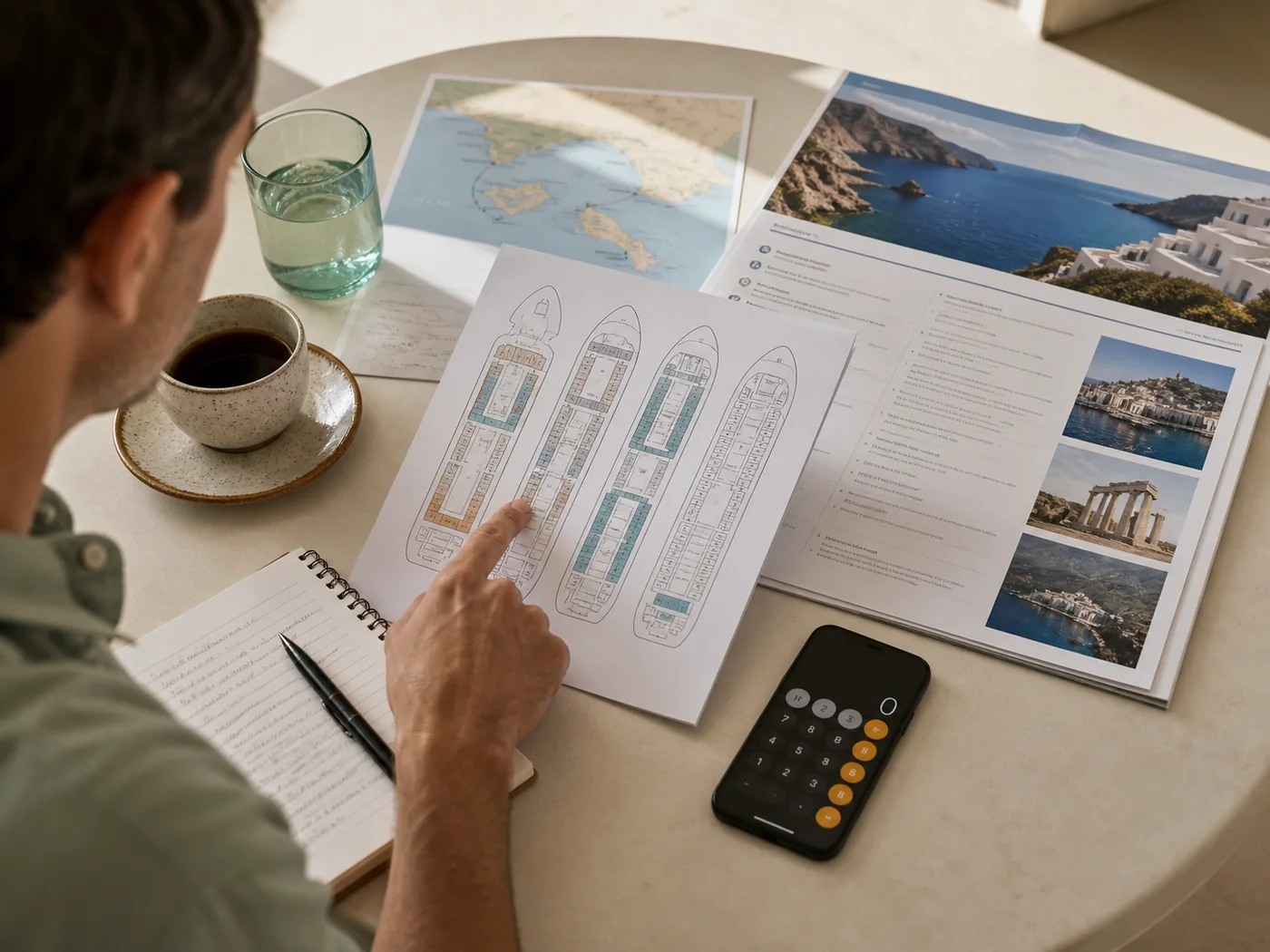
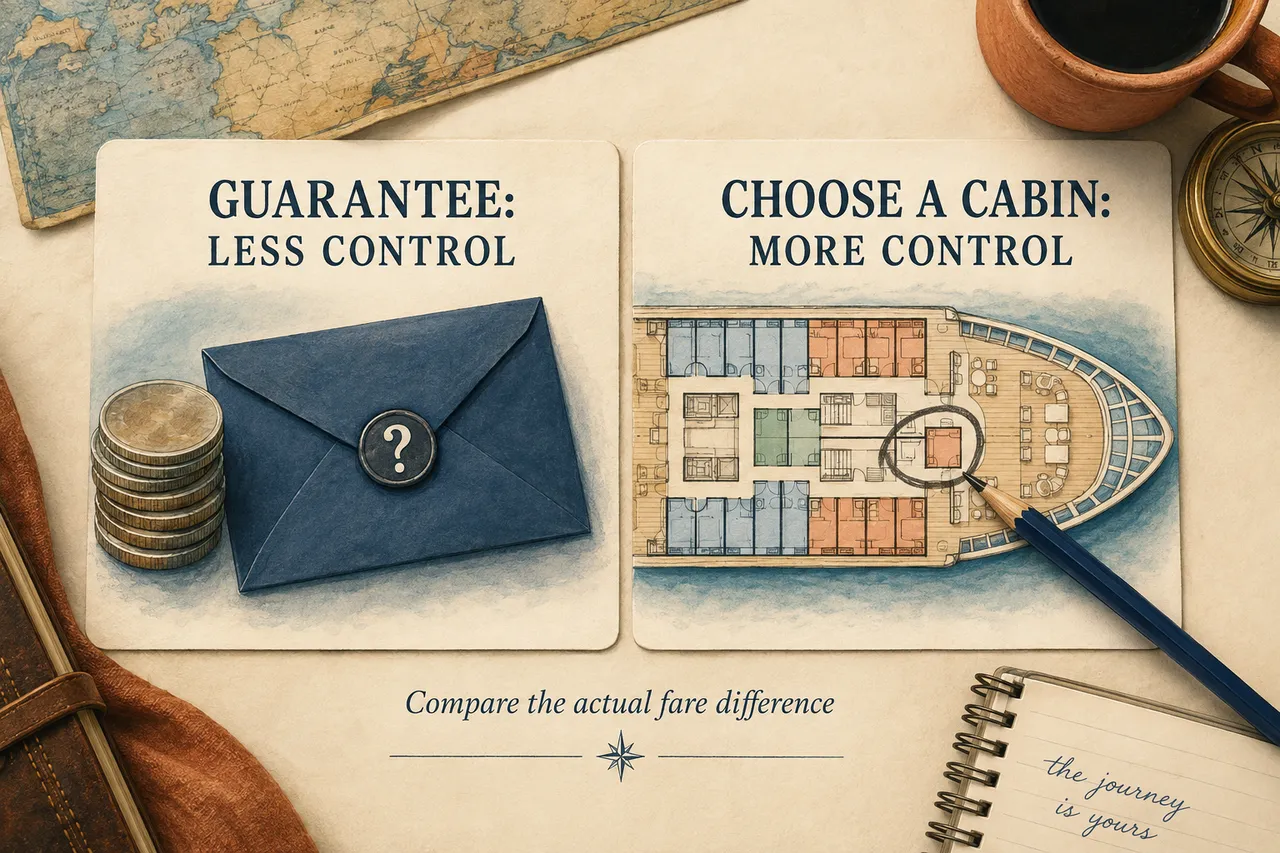
A guarantee cabin can be a sensible booking for someone flexible about where they sleep. It can be a poor match for someone whose holiday depends on one particular location or view. The useful question is not whether guarantee cabins are ‘good’. It is whether the actual saving pays you enough to give up choosing the room.
Quick take
What matters most
- Read the exact guaranteed category and exclusions; do not substitute your idea of the ideal balcony or ocean view.
- Treat an upgrade as a possibility, not part of the value you are buying.
- If location, accessibility or nearby rooms are essential, have those requirements confirmed before booking.
- Compare complete fares and inclusions, not just two headline prices.
1. What a guarantee cabin actually means
With a guarantee booking, you accept the specified accommodation category while the cruise line allocates the exact room. Royal Caribbean calls this GTY or ‘We Pick’; its FAQ says assignment can happen as late as port check-in. Norwegian’s Australian terms also describe assignment up to sailing day. Those are operator examples, not a shared deadline for every cruise line.
Ask the seller to show the category code and written definition on your quote. Keep those details with the booking confirmation. A photograph of a desirable room in the category is not a promise that you will receive its particular position, outlook or configuration. If you cannot explain what the minimum acceptable allocation is, you are not ready to compare the price.
2. Check the view you could actually receive
Royal Caribbean warns that GTY assignments can have obstructed views; on Oasis and Icon class ships, a balcony allocation may face an internal neighborhood, depending on the category booked. Do not read ‘balcony’ as automatically meaning an unobstructed sea-facing balcony. Read the category description attached to that offer.
Make a small list of deal-breakers: a particular view, a specific bed arrangement, a bath, a connecting door or proximity to another room. Then ask whether each item is guaranteed in writing. There is a useful difference between ‘we can request that’ and ‘this booking includes that’. Only the latter should count as secured when you make the decision.
3. Decide how much location matters to you
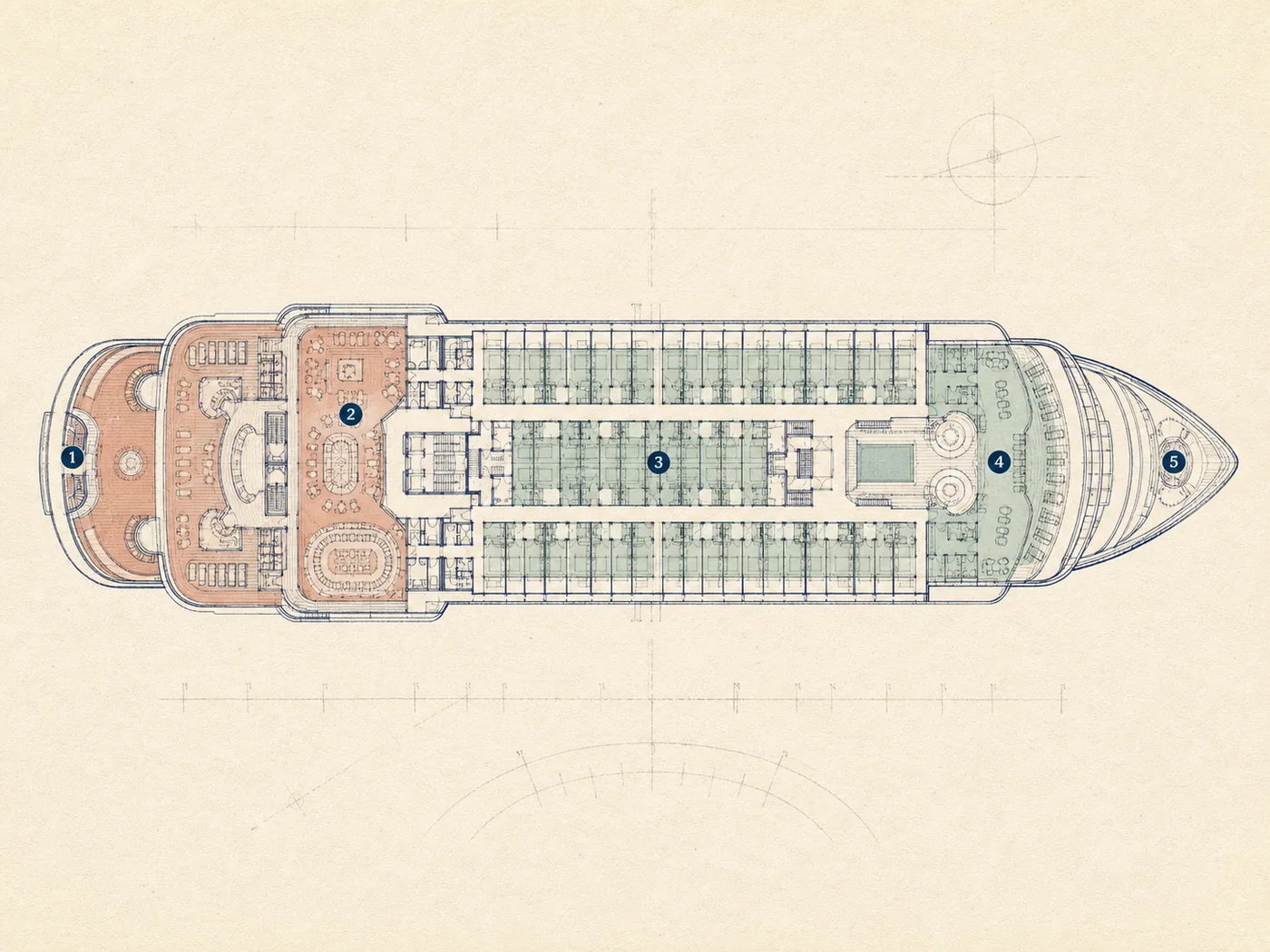
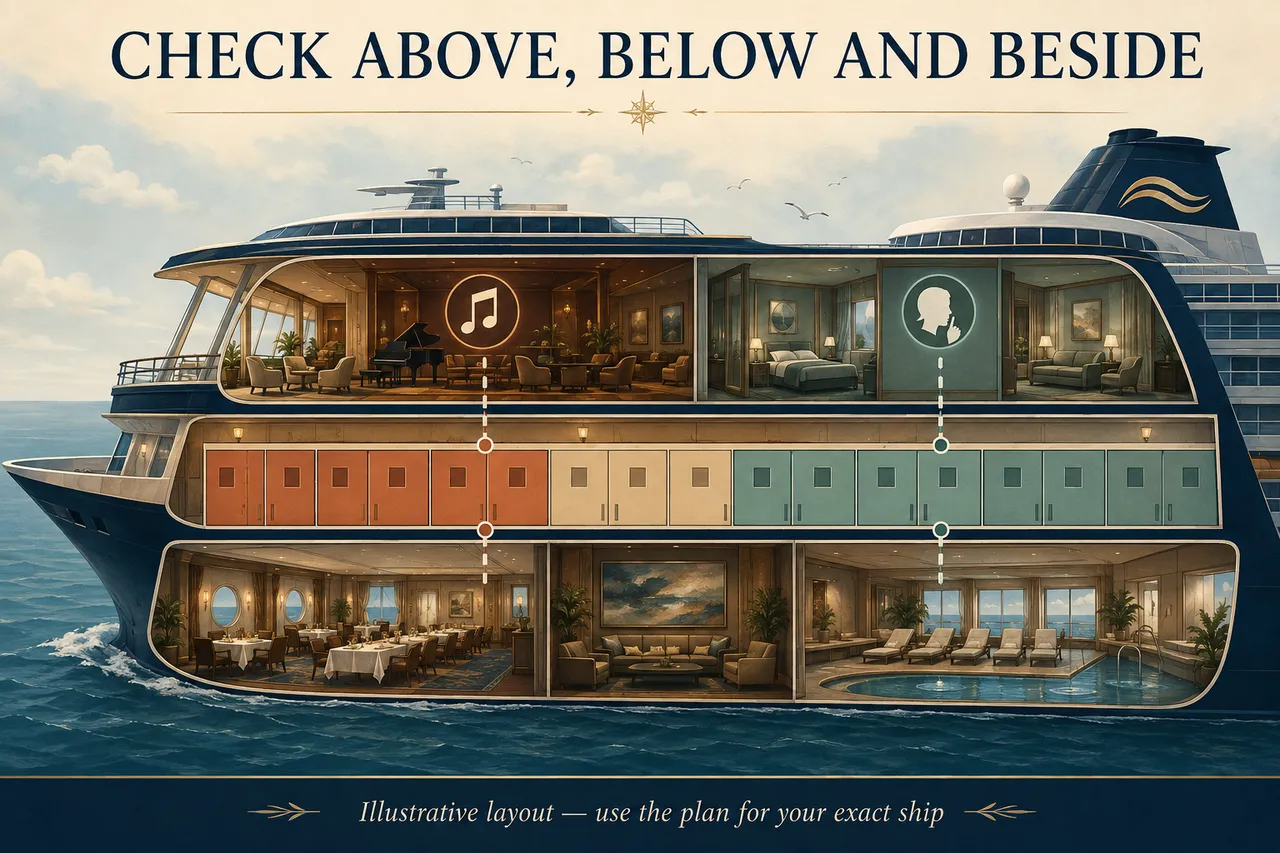
Read the ship’s deck plans even if you are not choosing a cabin number. Locate the category across the ship and identify the positions you would be least happy to receive. Look above, below and beside those rooms: public venues, working areas and circulation routes are more useful clues than the category’s promotional name.
A deck plan is a screening tool, not an acoustic test. It cannot promise silence, show every operational sound or tell you exactly how you will feel at sea. Use it to identify questions for the seller. If you are already trying to rule out most of the possible rooms, choosing your own cabin is probably a better fit for your priorities.
4. Put a number on the trade-off
Compare the same ship, sailing, number of guests and broadly equivalent accommodation. Add taxes and fees shown in each quote, then compare inclusions you would actually use. Record cancellation and deposit conditions separately: a lower price with different restrictions is not the same offer with a cabin-selection discount.
Here is a purely hypothetical example, not a current fare: a guarantee totals $2,000 for your party and a selected cabin totals $2,200, with otherwise identical conditions. The saving is $200 for the whole trip. On a seven-night cruise, that is about $29 per cabin per night. Ask whether that amount feels worthwhile if you receive your least-preferred eligible room.
Do the calculation without assigning value to an imagined upgrade. If the offer only feels attractive because you expect a better category than the one purchased, the comparison rests on something you have not bought. Conversely, a meaningful saving can be useful when you would genuinely be comfortable throughout the eligible category.
5. Do not count on changing the cabin later
Norwegian’s Australian GTY terms say that changes requested by the guest or agent cannot be accepted after allocation. Other operators and booking markets may differ. Ask about assignment and change rules before paying, rather than assuming customer service will move you if the result is disappointing.
Check the booking through the cruise line’s normal account or your seller’s updates. Once a number appears, review its category and location against what was purchased. If you think the allocation does not match the written booking, raise that specific discrepancy promptly. Disliking an otherwise eligible location is a different issue from receiving something outside the confirmed offer.
6. When choosing your own room makes more sense
Our recommendation is to prioritize a confirmed room when a particular arrangement is essential: an accessible cabin, connecting rooms, a specific bedding setup or a position close to someone you are traveling with. Have the cruise line confirm suitability; a preference entered on a booking should not be treated as an agreed requirement.
Royal Caribbean notes that guarantee bookings may not be near other traveling parties and that consecutive cruises can involve changing cabins. Norwegian’s Australian terms do not permit GTY on back-to-back reservations. The contrast is why you must check your own line and market rather than applying a rule from someone else’s trip.
7. The decision test before you pay
A guarantee is worth considering when you understand the eligible category, have no unconfirmed must-haves, and the actual saving matters to your budget. Picking a room is worth considering when the location itself is part of what makes the trip appealing. Neither choice proves that someone is a more experienced cruiser.
Before accepting, finish this sentence: ‘I would still be happy with this price if I received…’ and name the least-preferred eligible outcome. If you cannot finish it comfortably, compare a selected cabin, another category or another sailing. The goal is not to win an allocation lottery. It is to book a trip whose ordinary outcome already works for you.
Save before booking
Before accepting a guarantee fare
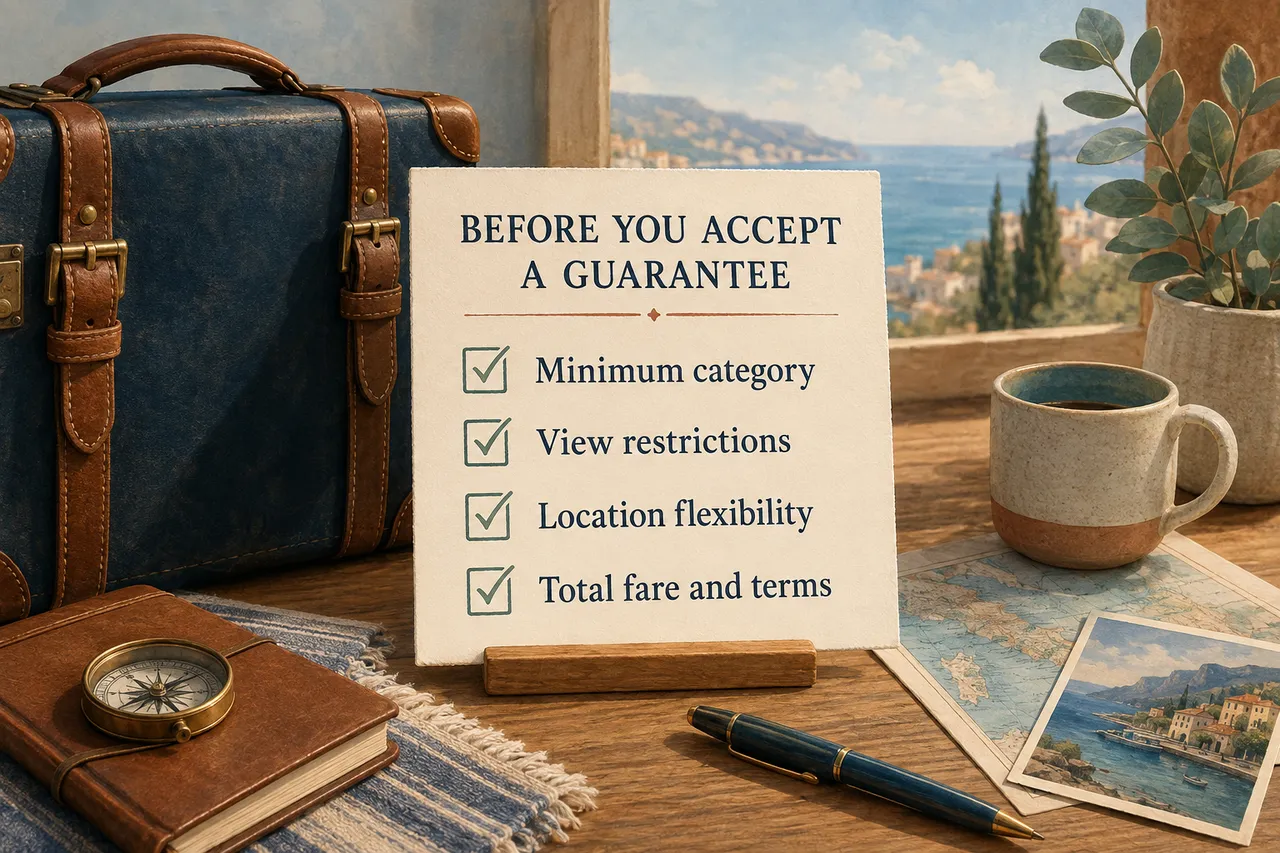
Exact category code and minimum accommodation saved
Possible views and configurations understood
No essential location or access need left as an unconfirmed request
Total saving calculated without a hoped-for upgrade
Assignment and change rules checked for this booking market
Deposit, cancellation terms and inclusions compared
Official source notes
These sources support the operator rules and practical travel points in this guide. Our recommendations are editorial judgments, not promises by a provider. Accessed September 7, 2026.