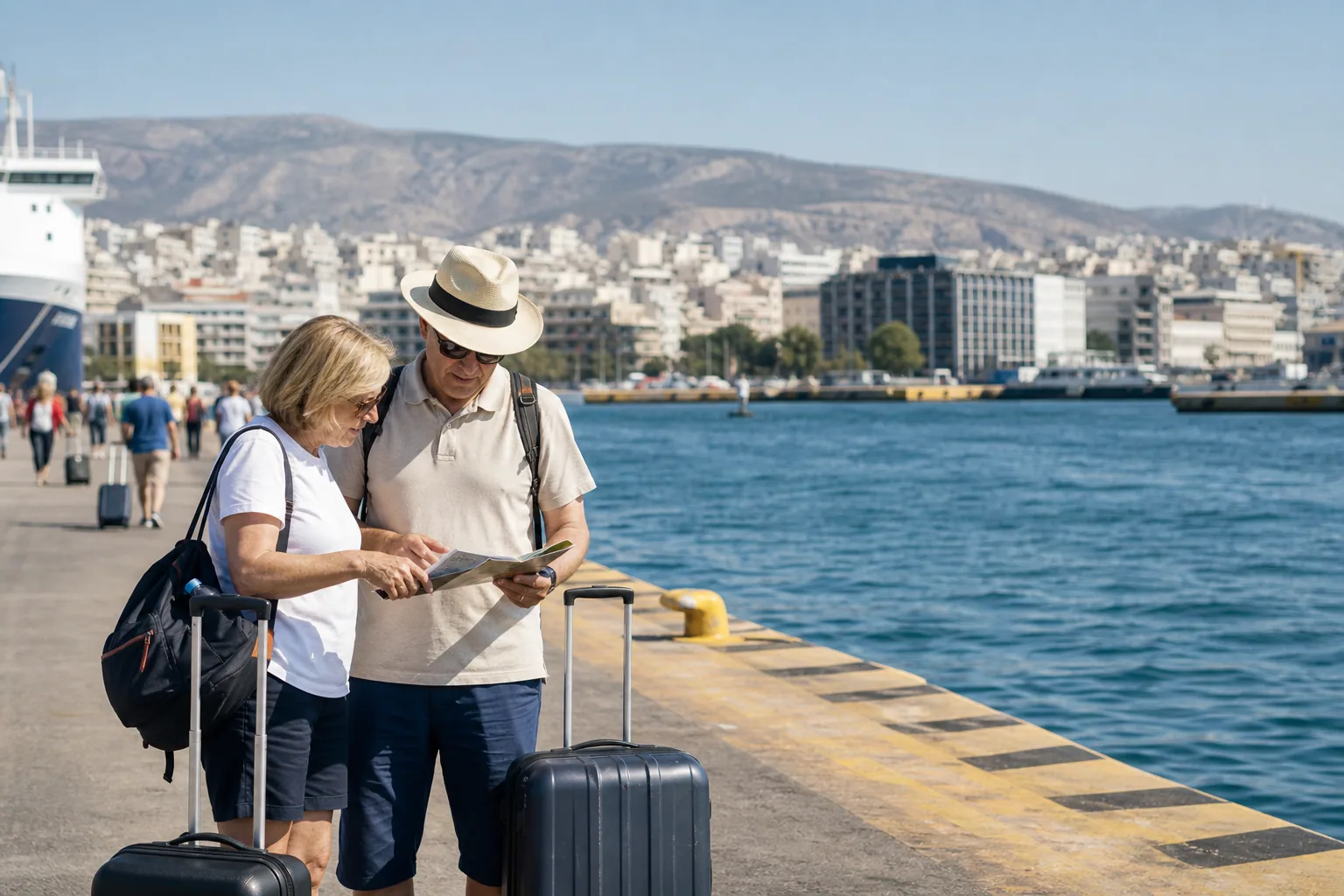
Piraeus is Athens’ port, but the cruise terminal and the Acropolis are not the same stop. The most useful plan connects the berth, city transport, one major archaeological visit, and enough shade and buffer to keep the day enjoyable.
Quick take
What matters most
- Confirm which of Piraeus’ cruise terminals serves your ship.
- Check whether the seasonal X80 express is operating on your date; keep a metro or taxi alternative.
- Use the official Greek cultural-ticketing route for the Acropolis.
- Schedule the most exposed walking earlier and return to Piraeus conservatively.
1. Start with the correct Piraeus terminal
The Piraeus Port Authority lists three cruise passenger terminals and provides free transport between anchoring areas and passenger terminals where required. The distance from your exit to city transport therefore depends on the berth.
Save the terminal name and port map before leaving the ship. ‘Piraeus’ as a single map destination is too broad for a reliable return plan.
2. Compare the express bus, metro route, and taxi
OASA’s X80 express is designed to connect the cruise-terminal area with the Acropolis and Syntagma during its announced operating season, generally May to October. Exact dates and service conditions should be checked for your visit.
The metro can be a dependable alternative, but reaching the station is part of the journey from the cruise terminals. A taxi reduces transfers but remains exposed to road traffic. Save two workable options rather than relying on one perfect connection.
3. Make the Acropolis the fixed point
If the Acropolis is the priority, build the day around its official entry information and ticket. The Greek Ministry of Culture directs visitors to official online ticketing; check the current time-slot and entry conditions there.
Pair the site with one nearby area—the Acropolis Museum, Plaka, or the Ancient Agora zone—rather than crossing Athens repeatedly. Keep the route compact enough to shorten in high heat.
4. Treat heat as a scheduling constraint
The Acropolis is exposed and involves polished, uneven surfaces. Start earlier when the ship’s schedule allows, carry water, wear secure footwear, and include an indoor or shaded recovery stop.
Operating conditions at archaeological sites can change during extreme weather. Recheck official information close to the visit instead of assuming the original plan will remain available all day.
5. Set the Athens-departure time before arrival
Work backward from all-aboard through terminal security, the port-side walk or shuttle, and the complete city-to-port journey. Add extra time when several large ships are in port.
Place the final Athens stop near a direct transport option. A late detour is rarely worth converting the return into a race.
6. Let Piraeus be more than a fallback
A short or disrupted call can still support a lower-pressure day around central Piraeus, the Archaeological Museum area, marina districts, or the waterfront. This avoids spending most of a reduced visit transferring to and from Athens.
Choose the backup before disembarking. If the primary transport plan fails early, switch while there is still time to enjoy the port city.
Save before booking
Piraeus-to-Athens check
Cruise terminal and port exit confirmed
X80 operating dates checked
Second transport option saved
Official Acropolis ticket information verified
Heat and walking plan adjusted
Athens-departure time set
Official source notes
These sources support the operator rules and practical travel points in this guide. Our recommendations are editorial judgments, not promises by a provider. Accessed August 30, 2026.